RSS

Whew! Good News, Bad News

The good news is I’ve been writing. The bad news is it has not been on my blog.

The good news is I have been able to read some of your posts and comment a little. The bad news is only time for a few comments.

So, on the positive side, I was able to submit another article to Stick and String Traditional Archery magazine. it went in just under the next editions deadline. I believe it will hit the stands in late June. It is a How-to article with lots of pics. I’ll post it in my Traditional Archery category after it is released.

Another positive is, I have been working on the Actress and the Warlock. Some of it will not get posted to the blog because I want to keep a little of the story to myself until I get ready to publish it. However, another scene should make an appearance next week. I think it’s time to start beating up the characters. They have had it too good for too long. ;-) I’ve also had a couple of ideas for plot twists that I want to work in. What if the paparazzi take pictures of something they can’t recognize, I mean besides a sober Lindsey Lohan. Oops. Sorry for the cheap shot LL. Also, the chance to kill off an arrogant publicist might be fun too. We’ll have to wait and see what develops. It is, after all a cliché.

Continuing with the positives, my Twitter experience has improved and seems to be making more sense. I will continue to try to tweet more.

Now for the Bad News. I PROMISE to get a viable post on this blog site within the next five days! There, I have a deadline. We’ll see if that works.


7 Comments

Posted by on May 31, 2013 in Musings and Odd Thoughts


Tags: , , , , ,

What a Cat Thinks of Twitter

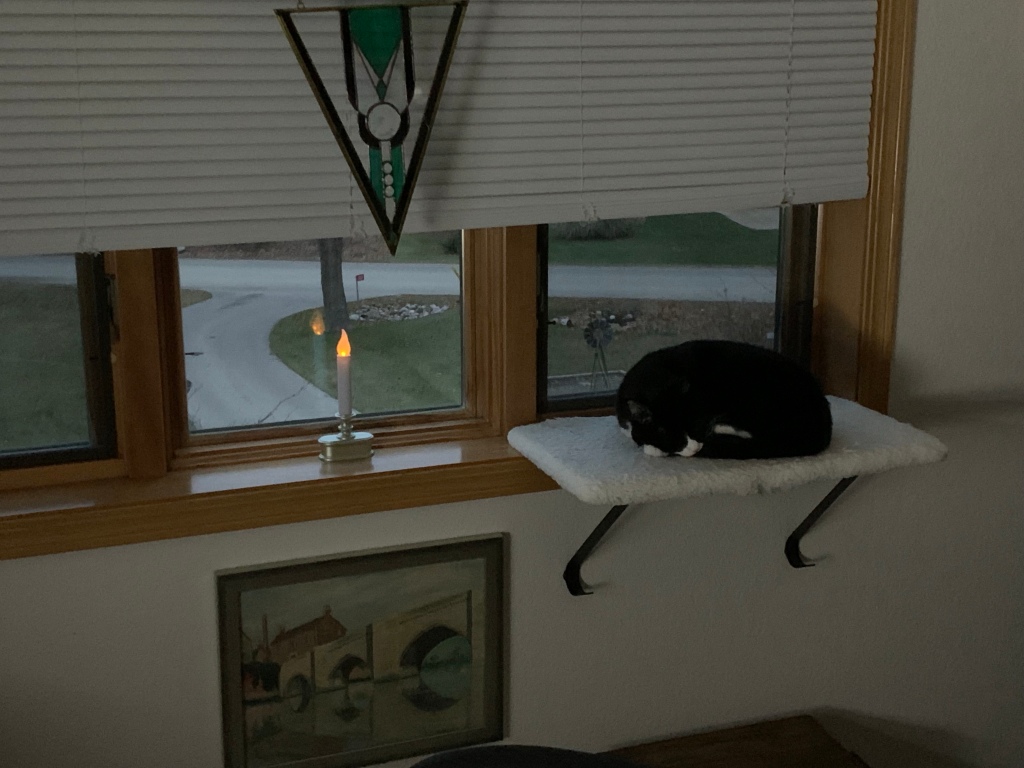
Marble tracking a Tweeter!

Marble tracking a Tweeter!

It’s been a couple of months now since I created my Twitter account. So, I thought I would give you a status check and let you know my current view of this social media platform. We have all heard that to be successful writers, we need to create our own marketing network because no one will market for us. In conjunction with this advice is a list of potential recommended social media platforms. Tops among this list is something called Twitter.

To be honest, when I first heard of Twitter, two things came to mind, songbirds singing to attract a mate and little old ladies playing pinochle and sipping hard lemonade. After two months using this social media platform, I am pleased to report that my initial views were spot on! Let me explain.

Twitter is a communication tool. A good example would be the old-fashioned “party” telephone line, but on steroids. Instead of ten or fifteen people hearing what you say, it’s more like ten or fifteen million. Okay, maybe only Justin B. reaches 15 Million. Anyway, let’s just say you can reach a lot of people…IF…they follow you. We will not get to why someone would follow you, there are volumes of material on the mechanics of using Twitter. Let’s talk instead, about how writers are currently using Twitter.

I currently follow a wide variety of individuals. Actresses, famous authors, a comedian, a bunch or writer types I don’t know and even some of you are on my list of following. I read skim through several hundred tweets a day. This takes on average 30 minutes. Thank God for train rides. If we throw out the comedian, (sorry Bill!) and the actresses, (Okay let’s set them a side gently. They are nice ladies) what I am left with is primarily writers and a few readers. Wow, that cut down the number of tweets by around 25! That leaves, let’s say 250 tweets. 99% of these remaining tweets fall into one of four categories.

The first category is the personal odd thought tweet. For example: ‘I need more caffeine this AM.’ Or maybe, ‘Just saw a great movie with one of my peeps.’ Or, a quote that you find interesting. These are just little gems to let the world know you are still alive and may prompt a RT (retweet) if it is particularly interesting.

The second, and by far the most prevalent type of tweet. Like a songbird singing sweetly in the tree, Twitter, for the most part, is about self-promotion. These are the ‘Hey I’ve got a great book/blog, come see/buy it!’ Book reviews also fall into this category. These tweets take up roughly 150 of the remaining 250 tweets

Third comes the conversation tweets. This is where two or more people carry on a conversation, 140 characters at a time. Keep in mind it is not a private conversation. People who follow any of the conversationalist can see the whole thing and even join in. Sometimes, it approaches the old women playing pinochle image. Although the language may be a bit too harsh for granny.

Lastly are the normal blog post links. I keep them separate because they are usually commentary in nature and are not trying to ‘sell’ you on something.

There is one other thing I’d like to point out. There are individuals out there who retweet EVERYTHING they see. Are they trying to help others out by giving the original tweet more exposure? Or, are they just interested in seeing their own name 150 times and hour?

If I seem a little cynical  please forgive me. As I stated, I am still new to this and trying to learn how best to use the monster called Twitter.

I like the conversation feature and the blog links provide access to posts I might otherwise miss. Also, Bill M. just makes me laugh when I desperately need it. I keep asking myself, ‘What do I want from this?’ For me the jury is still out and I will continue to try new things in the Twitterverse. As far as my cat Marble, when he sees a Tweeter, He thinks, “LUNCH”.

You’ll find me at @langledd. Come, let’s play some pinochle and drink some hard lemonade.

 
11 Comments

Posted by on May 15, 2013 in Musings and Odd Thoughts


Tags: , , , , ,

One Writer’s Update

During the past few weeks, my non-writing life has pushed my writing life into the passenger seat. Not the back seat mind you.

I attended a class on Speculative Fiction through the Loft Literary Center. 6 weeks of reading and a few writing exercises unrelated to my WIP. It kept me busy but, the class wasn’t what I was hoping for. However, as usual, I found some takeaways that will help to improve my writing. So, it was a win in the end.

I haven’t posted any new sections on the Actress and the Warlock. However, there has been work done on this project. I have gone back and cleaned up the first few sections. Since much of this has been done as flashes, several plot points needed to be rethought out to ensure continuity going forward. A missing scene of mostly dialogue is where I’ve spent most of my time writing. I want to get this scene done before I move the story forward. I’m hoping to have it ready to post next week.

I’ve been playing around some with Twitter. It has been an interesting experience worthy of its own post. Yeah, I’ll save that one for later. It might be a really short, or really long post depending on how my last Tweet session goes. ;-)

Lastly, I just finished reading, On Writing, by Stephen King. If you haven’t read it, I would recommend it. The second half of the book deals with his writing tool box and his method. As with most books on writing, the reader has to take what is said and try to apply it in their own way. The nice thing about this book was that the author put his advice in PLAIN language with very little interpretation needed. Obviously, his method works. On a side note I found the section where he talks about his accident rather interesting. He is very lucky to have survived As a former EMT, having Stephen describe his own experience, brought back more than a few memories for me, of being on the care giver vs the patient. Overall, On Writing, was a good read.

One other thing. I’ve been looking for techniques on editing, specifically, First Person POV, other than trying to remove “I’s”. For example, checking verb tenses in compound sentences. Those of you who write in first person, do you have an editing checklist that you use? No sense reinventing the wheel.

Okay, now I’m off to write some dialogue.


Tags: , , , , , , ,

First lines

Some of my favorite first lines follow:

“Once upon a time…” – Everyone has used this one.

“There are many perks to living twenty-one centuries, and foremost among them is bearing witness to the rare birth of genius.” – Hounded by Kevin Hearne

“It was the best of times, it was the worst of times, it was the age of wisdom, it was the age of foolishness, it was the epoch of belief, it was the epoch of incredulity, it was the season of Light, it was the season of Darkness, it was the spring of hope, it was the winter of despair.” – Tale of Two Cities by Charles Dickens

“They shoot the white girl first.” – Paradise by Toni Morrison

“The building was on fire, and it wasn’t my fault.”— Blood Rites: A Novel of the Dresden Files by Jim Butcher

“A long time ago, in a galaxy far, far away…” – The open scrawl to the Star Wars movies by George Lucas

“In a hole in the ground there lived a hobbit.” – The Hobbit by J.R.R. Tolkien

Do these first lines draw you in? Do they paint a picture? Each is famous. Each is epic. Does the first line of your story capture the reader? If not, close this post and get back to work.

NO, NO. I’m just kidding. Read the rest of this post, make a comment, and then get back to writing.

The opening line I want to talk about is “Once upon a time…”. We have all heard this since we were too young to understand what it meant. If there every was a line that puts the reader into “Fantasy” mode, “Once upon a time…” is it. Those four words remove the reader to another time. The reader is prepared for something outside the norm. To some extent the word “Once…” is enough to accomplish the same effect.

The problem with those four words, is that they are cliché. They have been used so much, that to some extent, they have lost their effectiveness. Alone, they no longer carry the weight they once did. However, when followed by the right series of words, they still perform magic. For example:

“Once upon a time, there was a woman who discovered she had turned into the wrong person.” – Back When We Were Grown-Ups by Anne Tyler

My response to this first line is “Really? How?”. This is exactly what the author wanted me to say. With fifteen words, I am drawn into the story and my interest is building. Think about the affect the first dozen words of your story have on the reader. Now, think of the reader as a potential agent, editor, or publisher. Does your first line FORCE them to continue reading? If not, stop writing the rest of your story until you have that first line perfect. Great plot, characters, pacing, etc. will be for naught if the reader puts your story down after the first line. It is that important.

Now get back to writing.

 
13 Comments

Posted by on April 26, 2013 in Thoughts on Writing


Tags: , , , , ,

No Soapbox for Me

I admit I have been suffering from blank page syndrome when it comes to this blog. My last post was eight days ago. I have been working on the next two installments of the Actress and the Warlock but the motivation has been sorely lacking.

This past week, every time I sat down to write a post, it ended up with me on a soapbox, screaming at the top of my lungs at people who can’t think. The topics varied from political issues, to social issues, to writing issues, the world media, and back. The problem is, I promised myself that I would not, repeat, would not use this site for that purpose. I believe in the right of free speech. However, as writers, I also believe that we must be aware of our audience and use that rarest of commodities, Common Sense, when commenting on sensitive issues. Some would say I’m afraid to speak my mind. To them I say, “Any time, anywhere…except this blog.”

SO, I apologize for not posting anything of real interest this week. Next week will be better. I’m already feeling more productive.

As a wise man once said:

Better to say nothing, and be thought a fool,

Than to open ones mouth and remove all doubt! 

Another wise man, close to me, once said:

Someday your mouth will get you into trouble!

Thanks, Dad. Maybe I have learned something useful after all. :-)

 
12 Comments

Posted by on April 18, 2013 in Musings and Odd Thoughts


Tags: , , , ,

What’s in Character – Now What!

Okay. We have finished your character’s creation. during the preceding What’s in Character blog posts. You’ve been following this blog and building a character along the way. I can here you now. “Great Dennis. I have twenty-two pages of information on each of my characters. My character notebook is a novel unto itself. I know more about them than I do about my own family. What do I do with all of it?” My standard response to all questions is, “That depends.”

1)  If you don’t have a plot in mind for your story, dive into your character’s lives and find something that would come into great conflict with your protagonist. Hopefully, you can also find something about you protagonist that would pose a great conflict for your antagonist. Ta Da, you have an initial plot conflict.

2)  What if you have a plot in mind? Look for new potential character arcs. Ways in which your characters can change based on the plot line. Trust me that the information you have generated during the previous posts is full of potential.

3)  I have a plot. I have character arcs. I have all the conflicts the reader could hope to want in a story. What else can I use this tome for?  COLOR! The whole point of this exercise was to create characters that are real to the reader. Use this material to add realism. Have you character twirl her hair while she talks to the police detective. The officer doesn’t know this is a tell that she is lying bu,t you can let the reader know it is with a few well-chosen words of description embedded in the dialogue. Add bits and sprinkles of your character’s likes and dislikes or tags and traits into dialogue to break it up and make it grab the reader. After a critical scene, your character may need to reflect on the situation. Have them grab their favorite drink, find their favorite comfortable spot and reflect away. The added details can be found in you Tome of Characters. Have fun with it but, don’t over do it. The information about your character that you relate to thee reader should be there for a reason.

It was my intention to give you details as to how my “Yursi” character was created. However, my character file is at 23 pages and growing. that’s too much for this blog. You will just have to read my short story,  Good Night’s Sleep, and the novel to follow to find out more about the raven-haired witch with twin magical daggers that is searching for a lost relative and her own identity while being hunted down by her own family. :-) That project is slated for 2014.

Let me know how your characters turn out. 

 
8 Comments

Posted by on April 10, 2013 in What's in Character


Tags: , , , , , ,

What’s in Character – Experience

In previous What’s in Character posts, we have been creating a character full of interest and realism. We have discussed core personalities, physical appearances, and external influences. Five more layers to add and our creation will come to life.

The next layer is pretty straight forward but no less important. What age is the character? Sure the story line may dictate certain ages for your main characters. However, you should still consider the ramifications of the character being older or younger. Could the “Mentor” in your story be a sixteen year old computer prodigy instead of a seventy year old. How would that affect the way the character reacts? Try different ages for each of your characters and see how the dynamics of the story changes.

Another internal trait that can completely change a character is self-esteem. Variations in self-esteem can affect different core personalities in a variety of ways. A leader with poor self-esteem may look to his advisers to make critical decisions. A self-absorbed engineer may ignore the advice of the architect and take shortcuts when building a skyscraper, just to come in on time and under budget. He could care less that the building is unsafe. Self-esteem issues are very high on the list of reasons people seek counselling. Why does the character see themselves the way they do?

That brings us to major events that have affected the character. Most of us can look back over our lives and point to few events that changed our lives. Our lives were changed not only by the events themselves, but by the way we reacted to the events. Sometimes these events are global and affect thousands of people. Natural disasters, war, and plague are a few that come to mind. Other times they are personal and may seem insignificant to an outsider. For example, a family member dies or is buried on a holiday or a parent ridicules a child in front of his friends. The event doesn’t have to be negative. Setting a state record in a sporting event, receiving the acceptance letter to a highly respected school, or winning the lottery could all be life altering events. Now take into account that core personality. Each personality type may react differently to the same event.

Closely related to major events are the passions that each person has. it may be writing, or running, or chess, or programming computers, or politics, or working with statistics. What ever it is, a character should have one or more things that they are passionate about. These are the things the character does when they are not working for a living. They may be related to the story line or they may be used as  a divergence to slow down the pace of a story. Either way, they make the character deeper. the reader can relate better to someone if they know what the character loves to do.

Okay. You are almost there. You should have a dozen or so pages, at least, of notes about your character. by now you should know the character well enough that you could sit down and have an interview with a reporter as your character and never miss a question. So…

Time to open an internet browser or your file cabinet and locate a “Character Questionnaire”. There are hundreds of them available. I’m sure you’ve seem them and you may have already used them. That’s fine. However, even if you used one before, you now have a fleshed out character that can actually answer the questions in a meaningful way. You have a background and experiences to relate to that will help you answer the questions. Take your time here. These questionnaires can provide a wealth of detail that you can use to draw the reader into your story and make them love/hate your characters.

There you are. If you have followed along and added all of the layers we have discussed, you have a fully fleshed out character that is ready to be thrown to the wolves of your story conflict. You will know how the character will react, most of the time, to most of the situations where you may place them. Why is he hedging you may ask? That’s because, no matter how well you develop a character outside of the story plot, some characters find a way to do what they want even though the writer doesn’t want them to. If this happens, my advice is to go with it. The character may know better than you.

Those of you who have been creating a character using this technique, I would love to hear from you on how it worked out, or not.

See the previous What’s in Character posts at: Core Personality, Physical, Natural Environment

 
4 Comments

Posted by on April 7, 2013 in What's in Character


Tags: , , , , ,

 
%d bloggers like this: